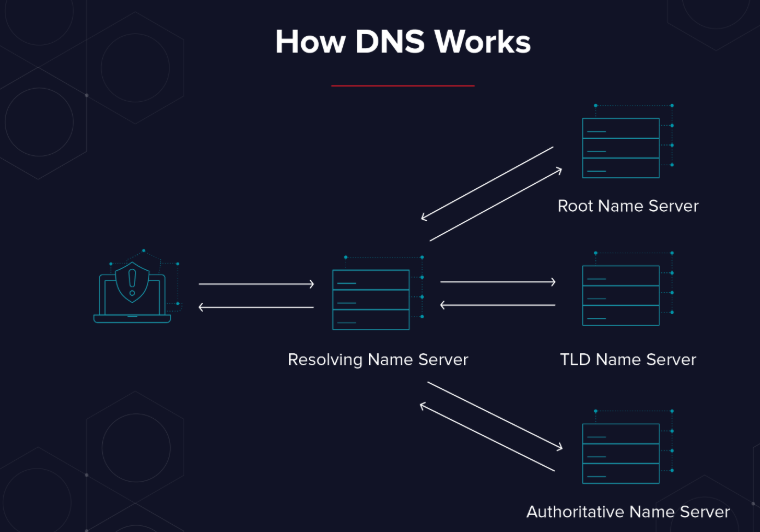
The Domain Name System (DNS) is a critical component of internet infrastructure. It facilitates the translation of user-friendly domain names into machine-readable IP addresses. This process is essential for efficient online navigation. Understanding the intricacies of DNS can reveal its significance in maintaining web accessibility. However, the mechanisms behind DNS resolution and its various record types warrant a closer examination to appreciate its full impact on internet functionality.
What Is DNS and Its Importance
The Domain Name System (DNS) serves as the backbone of internet navigation, translating human-readable domain names into machine-readable IP addresses.
Its functionality is crucial for seamless connectivity, enabling users to access resources efficiently.
Moreover, DNS security is paramount to protect against threats such as spoofing and DDoS attacks, ensuring that the freedom of information exchange remains intact in a digital landscape.
How DNS Translates Domain Names to IP Addresses
DNS translation of domain names to IP addresses involves a systematic query process that initiates when a user enters a website’s URL into a browser.
This process, known as domain name resolution, entails multiple steps of querying DNS servers to retrieve the corresponding IP address mapping.
Ultimately, this ensures seamless connectivity, allowing users to access desired content without needing to memorize numerical IP addresses.
The DNS Resolution Process
When a user initiates a request to access a website, the DNS resolution process begins, involving several key components and steps.
This includes DNS caching, where previously resolved queries are stored for efficiency.
Recursive queries are sent to DNS servers, which may contact authoritative servers for the final resolution.
Successful DNS propagation ensures that the updated records are disseminated throughout the network, optimizing access to the requested resource.
See also: How Data Centers Power the Internet
Common DNS Record Types and Their Functions
Understanding the DNS resolution process lays the groundwork for comprehending various DNS record types and their specific functions.
A Records map domain names to IPv4 addresses, while AAAA Records serve the same purpose for IPv6.
CNAME Records alias one domain to another, and MX Records direct email.
NS Records specify authoritative servers, PTR Records enable reverse lookups, and SRV Records define service locations.
Conclusion
In summary, the Domain Name System serves as the internet’s telephone directory, translating user-friendly domain names into machine-readable IP addresses. This intricate resolution process, akin to a well-orchestrated symphony, harmonizes multiple components—recursive servers, authoritative servers, and caching mechanisms—to ensure seamless navigation. Understanding DNS not only highlights its critical role in internet functionality but also underscores the complexity of modern digital communication, where every click is a note contributing to the larger melody of connectivity.


 By
By